
How Often Should You Recoat Hardwood Floors?
A recoat every few years can postpone a full sanding for decades. Here's how to time it right.
- 5.0★ from 65 Google reviews
- 20+ years in East Idaho
- Free written estimates
- Dust-contained sanding
- Moisture tested before install
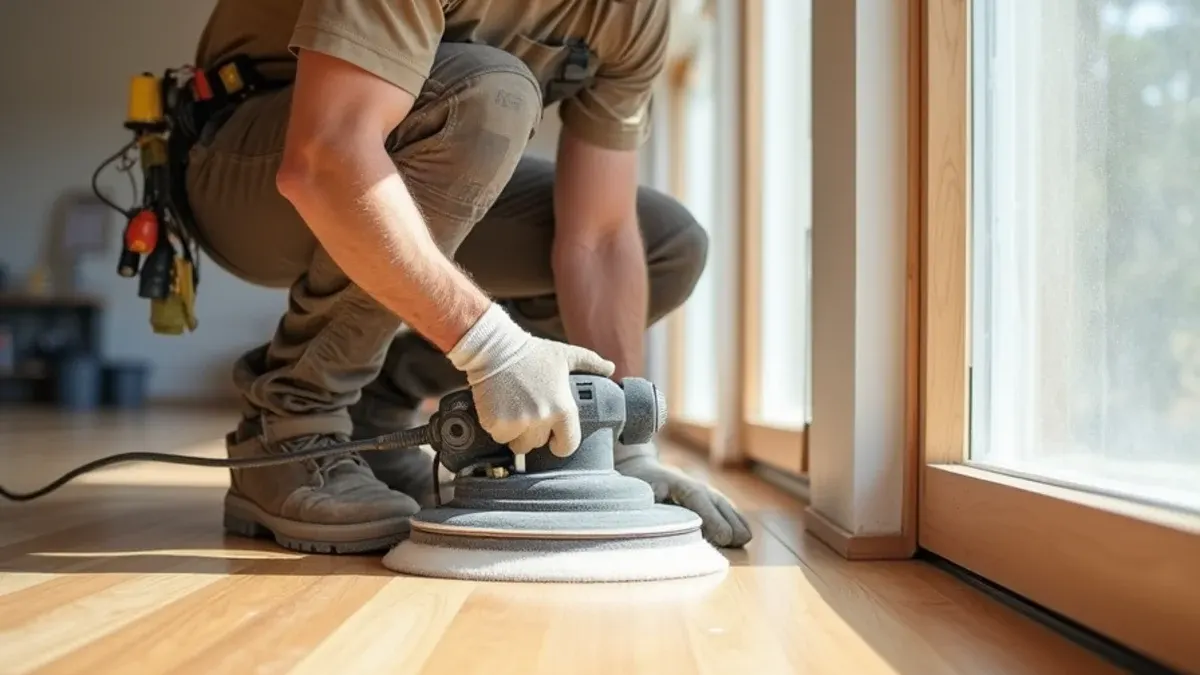
Most hardwood floors benefit from a screen-and-recoat every three to five years, sooner in high-traffic homes. A recoat refreshes the finish before it wears through to bare wood, so you avoid a full sanding. Timed right, recoats can push a complete refinish out by decades. The key is catching the finish before it fails.
What's the difference between a recoat and a refinish?
These get confused all the time, and the difference is money. A screen-and-recoat leaves the wood alone. We abrade the existing finish with a buffer, clean it, and lay one fresh coat of finish on top. No sanding to bare wood, no dust from cutting into the floor, and the floor is back in service quickly.
A full refinish is a different animal. We sand the floor down through the old finish to raw wood, which removes a thin layer of the board itself, then stain if needed and build several finish coats. It's the only way to fix deep scratches, water stains, or a color change, but it uses up some of the floor's limited thickness and takes far longer.
There's a practical difference in disruption, too. A recoat is a one-day job in most homes, with light dust and a finish that's walkable soon after, so you're not moving out of the house. A full refinish takes several days, throws real dust despite containment, and needs cure time before furniture and rugs go back. The recoat is the one you can live with; the refinish is the one you plan around.
The whole point of recoating is to keep your floor in the cheap, non-destructive lane as long as possible, so you rarely have to reach for the sander.
Want a straight answer for your floor?
Free, written estimates across East Idaho.
How often should you recoat?
There's no single number, because it depends on how hard your floor is used. The rough guide is every three to five years for a typical home, but the honest answer is to recoat based on wear, not the calendar. Watch the floor, not the date: a lightly used Pocatello living room and a busy family entry won't be on the same schedule even in the same house. Here's roughly how usage changes the interval.
- Light-traffic homes, few occupants, no pets: often five years or more between recoats.
- Average family home: roughly every three to four years.
- High-traffic homes, kids, dogs, a busy entry off a snowy Ucon winter: every two to three years, sometimes sooner in the main lanes.
- Rentals and commercial spaces: on a set schedule, often yearly or at each turnover, because wear is constant.
- Entryways and kitchen paths: these wear first and may signal a recoat before the rest of the floor does.
How to tell your floor is ready for a recoat
The finish gives you clear signals before it fails, if you know where to look. Stand so light rakes across the floor and look down the traffic lanes, the paths from the door, through the kitchen, around the couch. That's where wear shows first.
You're looking for a dull, flat sheen in those lanes compared to the protected areas under furniture, fine surface scratches that haven't yet reached the wood, and a floor that feels slightly rough or no longer cleans up to its old luster. Those are recoat signals. The finish is thinning but still covering the wood.
What you do not want to see is bare or graying wood, dark water stains, or scratches that have cut down into the board. Those mean the finish has already failed, and a recoat won't save it. The window for a recoat is while the finish is worn but still intact, which is exactly why inspecting early pays off.
Why recoating saves you money long-term
Here's the math that makes recoating worth it. A solid 3/4-inch floor can only be sanded to bare wood a handful of times in its life before it runs out of thickness above the tongue. Every full refinish spends one of those. Recoats spend none, because they don't touch the wood.
So a floor that's recoated on time, every few years, can go decades, sometimes its entire life, on a single original sanding, just topped up with fresh finish. A floor that's never recoated wears through to bare wood, forces a full sanding, and burns through its sandings far faster. Stretch those out and you may never need to replace the floor.
A recoat also costs a fraction of a full refinish and takes a fraction of the time, with far less dust and disruption. It's the rare maintenance item that's both cheaper now and cheaper over the life of the floor. That's why we push homeowners to recoat early rather than wait.
When a recoat won't work and you need a full sanding
Recoating has honest limits, and it's worth knowing them so you don't pay for a recoat that can't bond or hide the damage. A recoat is a surface refresh. It can't fix anything below the finish.
You're past recoating when the wood is bare and graying in the traffic lanes, when water has stained the boards dark, when there are deep gouges or dents that reach the wood, or when you want to change the floor's color, which requires sanding to raw wood to take new stain. There's also a bonding trap: if the floor was ever cleaned with oil soap or wax, a new coat may not stick, and that forces a full sanding even if the floor otherwise looks fine.
Prefinished floors add one more wrinkle worth mentioning. Many factory-finished floors carry a hard aluminum-oxide coating with a micro-beveled edge between boards, and getting a new site-applied coat to bond to that surface and look right takes proper abrasion and the right product. It's doable, but it's not automatic, which is another reason to have the floor assessed rather than assume any recoat will stick.
We test a small area for adhesion before committing to a recoat on an older floor. If it won't bond, we tell you, rather than lay a coat that peels in a year. That honesty is the difference between a recoat that lasts and money down the drain.
The hardest version of this conversation is the floor that's right on the line, mostly fine but with one worn-through spot in front of the sink or the back door. A recoat will refresh the rest of the floor but won't fix that bare patch, and spot-sanding a single area almost never blends invisibly on an older finish. In that case we lay out the options plainly: live with the one blemish after a recoat, or commit to a full sand that makes the whole floor uniform. There's no universally right answer; it depends on how much that one spot bothers you and your budget.
FAQ
Quick questions
How often do hardwood floors need to be recoated?
As a guide, every three to five years for a typical home, but you should recoat based on wear rather than the calendar. High-traffic homes with kids and pets may need it every two to three years, while lightly used rooms can go longer. The goal is to lay a fresh coat while the old finish is worn but hasn't yet worn through to bare wood.
Does recoating really prevent a full refinish?
It delays it, often for a very long time. A floor can only be sanded to raw wood a handful of times before it runs out of thickness. Recoats don't touch the wood, so a floor recoated on time can go decades on its original sanding. Let the finish wear through instead, and you're forced into a full sanding that spends one of those limited passes.
Can I recoat a floor that's already worn down to bare wood?
No. Once the wood is bare, graying or water-stained, the finish has failed and a recoat won't bond or hide the damage, so a full sanding is required. A recoat only works while the old finish is worn but still covering the wood. That's why it pays to inspect your traffic lanes and recoat early, before the finish wears through.
Will a recoat remove scratches in my floor?
Only the finest surface scratches that sit in the finish itself. A recoat buffs the surface and adds a fresh coat, so light scuffing blends in. But any scratch or gouge that has cut down into the wood will still show, because recoating doesn't sand the board. Deep scratches and dents need a full refinish to disappear.
The bottom line
Recoating is the cheapest, least disruptive way to keep a wood floor alive, and timed right it can push a full refinish out by decades. The trick is catching the finish while it's worn but not worn through. If your traffic lanes are looking dull in your Ucon or Pocatello home, call (844) 954-6342 and we'll tell you honestly whether it's recoat time.
Floors on your mind?
Call for a free, written estimate across Idaho Falls and East Idaho.
- 5.0★ from 65 Google reviews
- 20+ years in East Idaho
- Free written estimates
- Dust-contained sanding
- Moisture tested before install
Wood Flooring Idaho · Idaho Falls, ID 83401 · (844) 954-6342