
Restoring the Oak Under the Carpet in Idaho Falls' 1950s–60s Homes
Many Idaho Falls ranch homes hide original oak under decades of carpet. Here's how to find out and bring it back.
- 5.0★ from 65 Google reviews
- 20+ years in East Idaho
- Free written estimates
- Dust-contained sanding
- Moisture tested before install
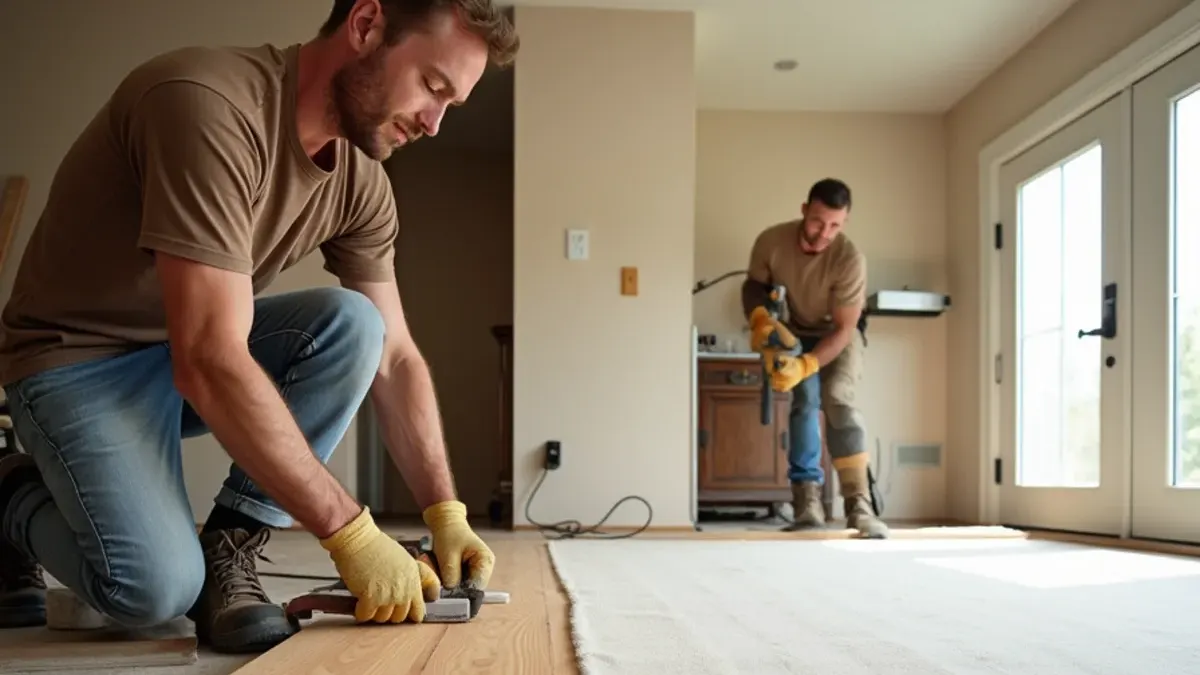
Many Idaho Falls ranch homes built in the 1950s and 60s have original oak strip flooring hidden under carpet. To bring it back you lift a carpet corner to confirm the wood, assess its thickness and condition, then sand and refinish it. Most of these floors clean up beautifully once uncovered.
Why so many Idaho Falls homes hide oak under carpet
Idaho Falls grew fast after the war, and the ranch and rambler homes that went up through the 1950s and 60s were almost all floored in narrow oak strips. That was simply how mid-century homes were built: 2-1/4-inch tongue-and-groove oak, nailed down over a wood subfloor, often red oak or a mix.
A generation later, wall-to-wall carpet became the fashion and the cheap comfort upgrade, and homeowners rolled it straight over the oak, usually without removing it. That means in neighborhoods from the Numbered Streets to Ucon, there are original hardwood floors sitting protected under decades of carpet and padding, waiting to be found.
Because the carpet shielded them from sun and wear, a lot of these floors are in better shape than the ones that stayed exposed. The oak is often tighter-grained and more stable than new flooring you can buy today.
There's a catch worth knowing about. Carpet in those decades was sometimes laid over a thin fiber or felt pad, and in some homes it was glued rather than stretched, especially in later remodels. Glue and backing residue left on the oak takes extra work to cut through when sanding. It's still refinishable; it just adds a step, and it's one of the things we look for the moment the carpet comes up.
Want a straight answer for your floor?
Free, written estimates across East Idaho.
How to tell if there's hardwood under your carpet
You don't have to guess. A few quick checks tell you whether oak is waiting underneath.
- Peel back a corner of carpet in a closet or low-traffic corner, where a small pull won't matter, and look at what's under the padding.
- Check the floor registers and transitions; you can often see the edge of the original flooring where the carpet meets a vent or a doorway.
- Look at the height of the floor relative to door thresholds and the bottom of baseboards, which hints at a hardwood layer below.
- Pull a floor vent cover and look down the side of the duct opening at the layers of flooring.
- In an unfinished basement or crawlspace, look up at the subfloor; a 1950s home with a board subfloor often has strip oak above it.
Assessing what you've got: thickness, staples and damage
Finding oak is the easy part. The real question is how much life is left in it. A 3/4-inch solid oak floor can be sanded several times over its life, but many of these homes have already been refinished once or twice before the carpet went down. We measure how much wood sits above the tongue to know how many sandings remain.
Carpet brings its own marks. Tack strips around the room perimeter leave nail holes, and old carpet was often stapled down through the oak, leaving hundreds of staples to pull before sanding. Those are normal and repairable. We also look for water stains near bathrooms and exterior doors, pet staining that soaked into the grain, and any boards that are cracked, cupped or missing.
Pet stains deserve a special mention, because they're the one problem that can defeat a refinish. Urine that soaked in years ago penetrates deep into the oak and leaves black marks that sanding won't always reach. Light staining sands out; deep, old staining sometimes means replacing those boards. We can usually tell how deep it goes once the finish is off and the bare wood is exposed.
None of this is automatically a dealbreaker. Perimeter tack holes hide under baseboard or fill cleanly. Damaged boards get laced in with matching oak. The assessment just tells us the scope honestly before we quote, so there are no surprises once the sanders are running.
The uncover-and-refinish process
- Remove the carpet, padding and tack strips, then pull every staple and carpet nail from the oak.
- Assess the bare floor for thickness, water damage, pet stains and boards that need replacing.
- Lace in matching oak where boards are cracked, stained through or missing.
- Sand the floor through progressively finer grits with dust-contained equipment, down to clean raw wood.
- Choose clear or stain; a natural or light tone shows off the original grain these floors are known for.
- Build finish coats with proper cure time between them, then reinstall base and transitions.
When original oak is worth saving, and when it isn't
Most of the time, these floors are absolutely worth saving. You're uncovering a solid hardwood floor that would cost a fortune to install new, made from old-growth oak that's tighter and more stable than today's stock. Refinishing is labor and finish, not new material and disposal, so it usually costs well under full replacement. The result also fits the home, which a new wide-plank floor often won't.
The honest exceptions: if the oak has already been sanded to the tongue and there's no wood left to cut, another full sanding isn't safe, and a screen-and-recoat or replacement is the better call. Widespread water damage from an old leak, or rot in the subfloor, can also tip the math toward replacement. And if large sections are simply missing, matching enough oak to lace in can cost more than it saves.
One decision that comes up on every one of these jobs is clear versus stain. The original oak was usually finished natural or with a light tone, and a lot of owners are surprised how good a simple clear or light finish looks once the wood is clean. A clear coat shows off the tight old grain and skips the staining step, which saves time and cost. A stain is there if you want a darker, more modern tone.
We measure thickness and check for damage before we tell you which way to go. In a 1950s Ucon rambler we'd rather save the original oak than sell you a new floor, but we'll be straight about it when the wood can't take another pass.
It's also worth weighing the home's character in the decision, not just the dollars. In an older Idaho Falls neighborhood, the original oak is part of what makes the house feel like itself, and buyers notice restored hardwood. Covering it back up with carpet or swapping it for a trendy wide-plank floor can actually read as cheaper, not nicer. For most of these ranch homes, bringing the original oak back is both the thriftier choice and the one that suits the house, which is a rare case where the budget answer and the right answer line up.
FAQ
Quick questions
Is the oak under my carpet worth refinishing?
In most Idaho Falls ranch homes, yes. Carpet protected the oak from sun and wear, so it's often in better shape than exposed floors of the same age, and it's old-growth wood you can't easily buy new. As long as there's enough thickness above the tongue to sand, refinishing costs far less than installing a new floor.
Will the carpet staples and tack strips ruin the floor?
No. Tack strips around the perimeter leave small nail holes that usually hide under the baseboard or fill cleanly, and carpet staples pull out before sanding. It's tedious work, hundreds of staples in a typical room, but it's routine on these jobs. Neither one is a reason to skip refinishing a sound oak floor.
Can you match new boards to my old oak if some are damaged?
Yes, through a process called lacing-in, where we weave new oak into the existing field so there's no hard seam. Matching 60-year-old oak takes care with species, grain and stain, since the old wood has ambered over time. We sample the stain on the new boards against your floor before finishing the whole room.
How do I know how many times my floor has been sanded already?
We check the thickness of wood above the tongue-and-groove, usually by pulling a vent or lifting a board at a transition. A factory 3/4-inch floor starts with plenty to work with; one that's been sanded twice before may be getting thin. If it's near the tongue, we'll recommend a lighter recoat instead of another full sanding.
The bottom line
There's a real chance your 1950s or 60s Idaho Falls home is hiding a solid oak floor under the carpet, and in most cases it cleans up into something no new floor can match. Lift a corner, see what's there, and if you want it assessed and refinished, call (844) 954-6342 for a no-pressure look and a written estimate.
Floors on your mind?
Call for a free, written estimate across Idaho Falls and East Idaho.
- 5.0★ from 65 Google reviews
- 20+ years in East Idaho
- Free written estimates
- Dust-contained sanding
- Moisture tested before install
Wood Flooring Idaho · Idaho Falls, ID 83401 · (844) 954-6342